How Much Damage Can Squirrels Do in a Loft?
The short answer: a grey squirrel can cause serious electrical, plumbing, and structural roofline damage within just a few days of getting inside. Because their front incisor teeth never stop growing, they gnaw constantly on whatever is in front of them—most commonly 13A twin-and-earth lighting cables, plastic central heating pipes, timber joists, and wooden fascia boards.
What to expect when sorting a loft squirrel problem:
- Timeframe: Standard lethal trapping and full roofline proofing usually takes 2 to 3 visits over 7 to 14 days.
- Immediate priority: Trapping the resident squirrels first before sealing the entry hole, so an animal isn't locked inside to chew through your ceilings in panic.
- Proofing materials: Only heavy-duty galvanised weld mesh and steel flashing will stop them; squirrels chew straight through expanding foam and plastic soffits.
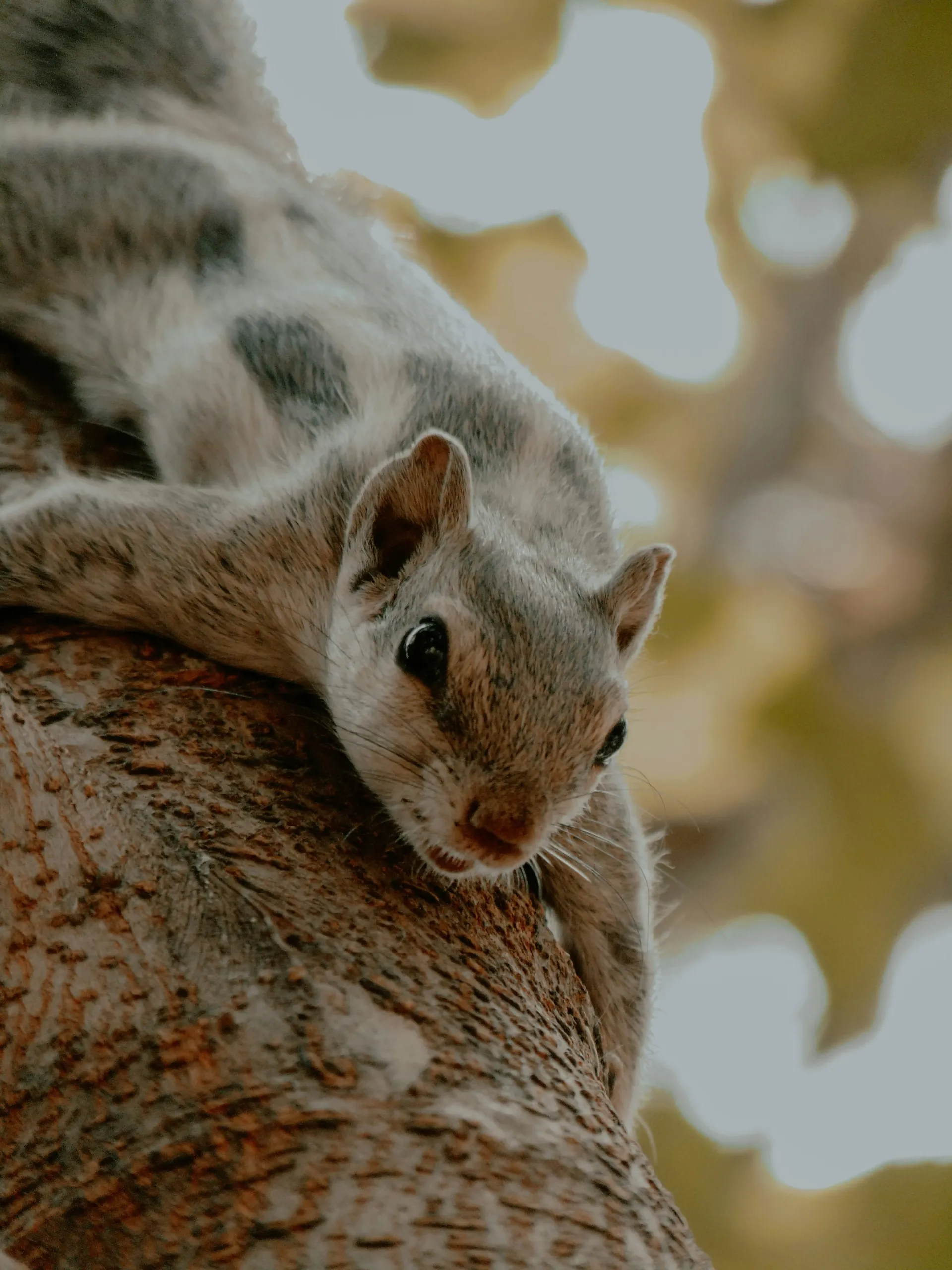
Grey squirrels are bold daytime climbers. Once they breach a rotten fascia board or lifted roof tile, they tear up fibreglass insulation to build dense, warm dreys.
The Four Main Hazards Squirrels Cause in Roof Spaces
Unlike field mice that quietly nibble food wrappers in the corner, grey squirrels are heavy, muscular animals with tremendous jaw strength. When we climb up through a loft hatch with inspection torches and rakes, the damage is usually obvious straight away. Here is what they actually do up there.
Stripped 13A Electrical Wiring & Fire Risks
Loft lighting circuits, extractor fan feeds, and shower cables are usually clipped directly along timber joists right where squirrels run. Squirrels strip the grey PVC outer sheathing and chew straight through the inner insulation around the live and neutral copper cores.
At best, this trips your RCD consumer unit and leaves you without upstairs lights. At worst, exposed copper cores arc against dry dust, timber rafters, or shredded nesting material, creating a genuine smouldering fire hazard in an unmonitored roof void.
Shredded Fibreglass Insulation & Fouling
A female squirrel looking to birth a litter (usually in spring or late summer) will drag metres of loft roll into a single corner to build a bulky dome nest called a drey. They rip up mineral wool, fibreglass, and even foil-backed insulation boards, leaving huge cold spots directly above your bedroom ceilings.
Because they urinate and defecate around the drey, the insulation quickly becomes sodden and smells strongly of ammonia. Left untreated, urine can soak through the plasterboard below, leaving brown damp rings on your ceiling.
Chewed Plastic Plumbing & Header Tanks
Many modern renovations and heating installs use barrier PEX or polybutylene push-fit plastic pipework in the attic. To a squirrel, a 15mm or 22mm plastic pipe feels just like a tree branch. A couple of sharp bites can pinhole a pressurised pipe, causing a sudden ceiling collapse from escaping water.
In older properties that still have cold water storage cisterns in the loft, squirrels frequently chew the plastic tank lids or drop contaminated nesting debris directly into the standing water supply.
Torn Fascias, Soffits & Roof Felt
Squirrels only need a gap the size of a golf ball to start gnawing their way in. Once they get their teeth onto the edge of a soft timber fascia board, uPVC soffit vent, or perished bitumen breathable membrane under the bottom row of slates, they widen the hole to the size of a grapefruit.
This open breach lets driving rain, snow, and secondary pests like wasps or starlings straight into your eaves, accelerating timber rot along the wall plate and rafter tails.
How to Tell if It’s Squirrels, Rats, or Birds in Your Roof
Homeowners often call us because they hear loud noises above the bed and aren't sure what they're dealing with. Before we even set up the ladders outside, the timing and weight of the sound gives us a very clear clue.
Daylight Activity (Dawn & Dusk) = Usually Grey Squirrels
Squirrels are diurnal. You will hear them crashing around at first light (around 5am to 7am in summer) as they leave to forage, and again just before sunset when they return to the drey. The sound is heavy—like a bag of rolling marbles when they drop acorns or conkers onto the plasterboard, accompanied by loud, rasping wood-chewing.
Middle of the Night (11pm to 3am) = Usually Rats or Mice
Brown rats and house mice are predominantly nocturnal. If the scratching is light, rapid, and happens in the dead of night—and especially if you also hear movement inside vertical stud walls or under the kitchen kickboards—it is much more likely to be rodents coming up through cavity walls or faulty drains rather than squirrels at the roofline.
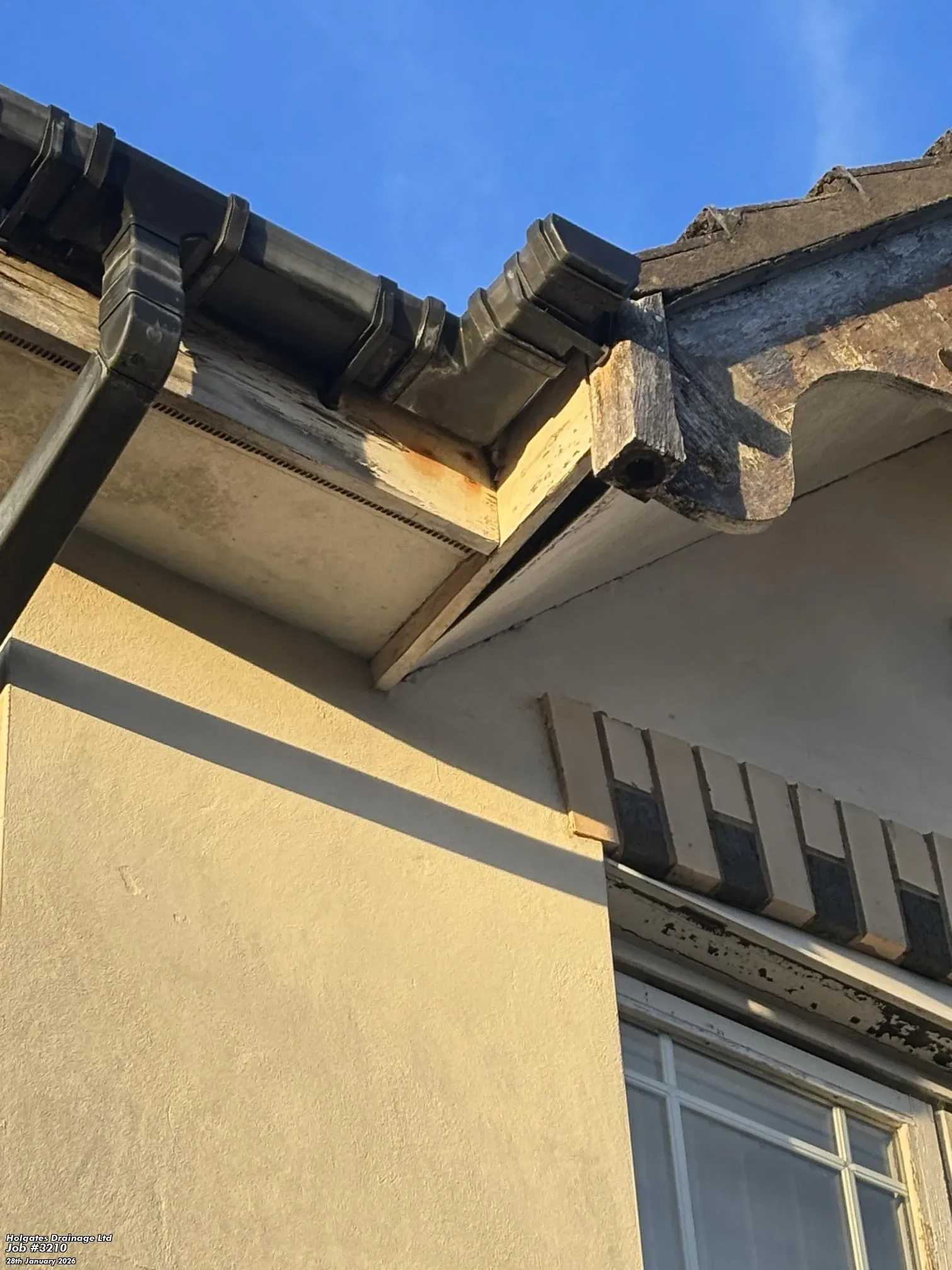
Typical Squirrel Entry Point
Chewed wooden fascia boards right above the guttering where squirrels climb up downpipes or jump from overhanging branches.
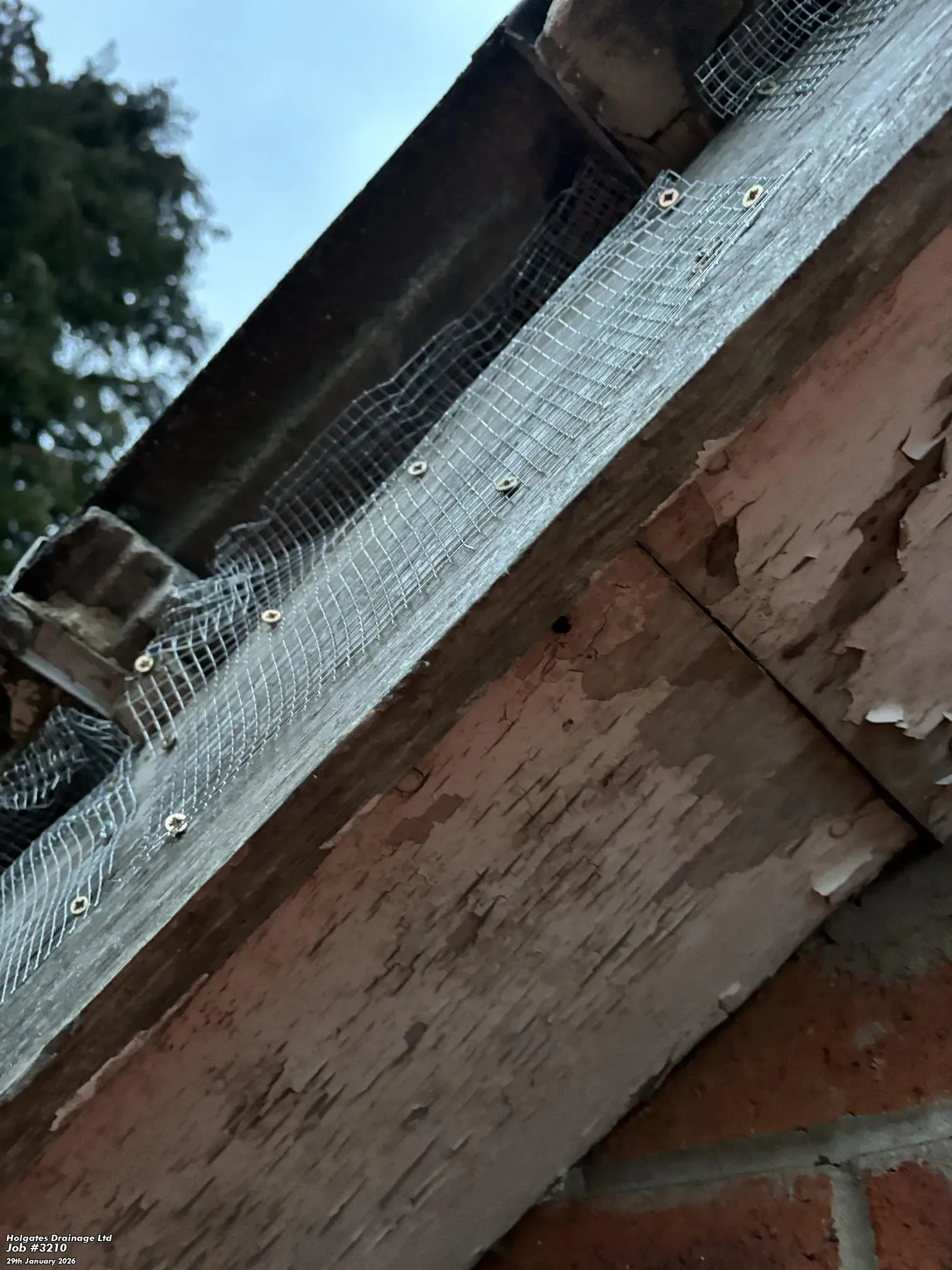
Heavy-Duty Galvanised Proofing
Once the loft is cleared, we screw heavy-gauge steel mesh directly across vulnerable eaves and soffit gaps so nothing can chew back in.
Why DIY Foam & Blocking the Hole Early Makes Things Worse
The biggest mistake we see homeowners or general handymen make is climbing a ladder during the day and stuffing expanding polyurethane foam, chicken wire, or timber blocks into the hole in the soffit before eradicating the squirrels.
1. Trapped Squirrels Panic-Chew
If you block a squirrel inside the loft—or lock a mother outside while her young are still in the drey—she will tear the roof apart to get back to them. We have attended homes where a locked-out squirrel ripped off three ridge tiles and chewed straight through a solid 18mm timber fascia board overnight.
2. UK Wildlife Law on Grey Squirrels
Under the Wildlife and Countryside Act 1981 and Invasive Alien Species rules, the grey squirrel (Sciurus carolinensis) is an invasive non-native species. If you catch one alive in a cage trap, it is a criminal offence to release it back into the wild. Professional technicians use calibrated, legal spring traps placed inside protective tunnels for an instant, humane dispatch.
3. Checking for Protected Bats First
Before setting any loft traps or sealing roofline gaps—particularly in stone cottages around Clitheroe and the Ribble Valley or older properties near woodland—we always check for bat droppings (which crumble to dust when rubbed, unlike solid rodent droppings). Bats and their roosts are strictly protected by law, so verifying the loft space first is essential.
How We Sort a Squirrel Infestation Properly
When we attend your property, we put on protective overshoes, lay dust sheets below your loft hatch, and inspect the entire roof void. We locate the active runway and drey, check your 13A cabling for immediate hazards, and install professional, tamper-resistant trapping units. Once all activity has stopped, we use high-reach ladders to fit heavy-duty galvanised weld mesh, downpipe climbing baffles, and stainless steel wire mesh across every weak point along your roofline.
Related Services & Guides
Practical advice and specialist pest proofing services across Blackburn and Lancashire.
Grey Squirrel Removal & Loft Proofing in Blackburn
Professional grey squirrel removal and loft proofing in Blackburn. Stop ceiling noise, gnawed wiring and roof damage with expert trapping and entry sealing.
How Much Does Pest Control Cost in the UK?
Find out what affects UK pest control prices, from council call-outs to private treatments, follow-up visits, and permanent entry-point proofing.
Are Pest Control Treatments Safe for Pets?
Find out how professional pest technicians protect dogs, cats, and children using lockable bait boxes, HSE-approved sprays, and safe drying times.
How Do Rats Get Into Houses Through Drains?
Find out how brown rats use broken clay pipes and missing drain bungs to enter cavity walls, and when a CCTV survey and rat blocker will stop them.
How to Tell if You Have Rats or Mice Under Floorboards
Hearing noises beneath the floor? Learn how to tell rats and mice apart using practical signs like dropping size, scratching sounds, and greasy rub marks.
Why Do Shop-Bought Mouse Traps and Poisons Fail?
Find out why DIY mouse traps and hardware-store poisons rarely clear a terrace house infestation, and why sealing 5mm entry gaps is the real fix.
What Are the UK Laws on Trapping Grey Squirrels?
Learn the UK legal rules on trapping invasive grey squirrels, why live release is illegal, and how to check for protected bats before starting loft work.
Why Should You Never Block Up a Wasp Nest Hole?
Blocking an active wasp hole with silicone or foam forces angry wasps to chew through internal plasterboard. Learn how professional lance treatments work.
How Do You Prepare a Room for Bed Bug Treatment?
Learn how to prepare your rooms before a professional bed bug visit, including how to bag laundry safely and clear furniture without spreading eggs.
How to Spot Cockroaches Behind Kitchen Appliances
Learn how to check behind fridges, dishwashers, and kickboards for cockroach droppings, egg cases, and musty smells in your home or commercial kitchen.
Why Am I Still Seeing Fleas After a Room Spray?
Learn why dormant flea cocoons hatch days after a professional spray, how long full eradication takes, and why you must wait to vacuum.
Bird Spikes vs Tensioned Wire: Which Works Best?
Compare stainless steel bird spikes and tensioned wire systems. Learn how bird species, roosting pressure, and ledge styles determine the right deterrent.
Does Bird Proofing Void Your Solar Panel Warranty?
Find out how professional non-penetrating solar clips secure bird mesh without drilling into your panels, keeping your manufacturer warranty fully valid.
Can Pigeons Under Solar Panels Cause Bird Mites Inside?
Learn how pigeons nesting under solar panels bring biting bird mites into upstairs bedrooms, and why nest removal and sanitisation must happen with meshing.
Why Is Cleaning Dried Pigeon Droppings Yourself Risky?
Learn why sweeping dry pigeon guano in lofts or on balconies releases harmful airborne spores, and how biocide damping down keeps your home safe.
Do Small Businesses Need a Pest Control Contract?
Weigh up one-off emergency call-outs against routine pest control contracts. Learn how regular checks catch drain defects and insects before stock is ruined.
How Many Visits Does Mouse Control Take?
Find out why clearing a mouse infestation usually takes 2 to 3 visits, from checking tamper-resistant bait boxes to sealing 5mm entry gaps with copper mesh.
When Does Wasp Season Start and End in the UK?
Find out when UK wasp season starts and finishes, why late-summer wasps turn aggressive, and why old paper nests are never reused.
Do Bed Bugs Mean Throwing Your Mattress Away?
Learn why dumping a mattress with bed bugs often spreads eggs through your home, and how professional heat and seam treatments save your furniture.
German vs Oriental Cockroaches: What Is the Difference?
Learn how to tell German and Oriental cockroaches apart, from warm appliance motors to damp cellar drains, and why species matters for eradication.
How Do Pest Technicians Work Discreetly in Shops?
See how commercial pest technicians manage inspections, hidden bait stations, and out-of-hours treatments in shops and restaurants without alarming customers.
What Happens if a House Survey Finds Woodworm?
Found woodworm on a house survey? Learn how we check for active beetles, test timber moisture, and treat loft rafters or joists to satisfy lenders.
Why Do Silverfish Gather in Bathrooms and Kitchens?
Find out why damp plaster, leaky pipes, and high humidity attract silverfish and beetles, plus practical steps to seal gaps and clear infestations.
Hearing Heavy Scratching or Gnawing in Your Loft?
Don't wait for a squirrel to chew through a lighting circuit or central heating pipe. Speak directly to our CPCA-accredited technicians in Ramsgreave, Blackburn for a fast inspection, free upfront quote, and permanent galvanised roof proofing.