Why Should You Never Block Up a Wasp Nest Hole?
Spotting wasps streaming in and out of a hole in your brickwork or an old airbrick is stressful. The natural instinct is to grab a tube of silicone sealant or expanding foam and plug the gap. Here is why blocking an active entrance is the worst thing you can do—and how we sort the problem safely without filling your bedrooms with angry insects.
The Short Answer: What You Need to Know Right Away
Never seal a wasp entry hole while the colony is alive. A summer wasp nest inside a wall cavity or roof void holds thousands of worker wasps. If you block their outside exit with expanding foam, mortar, or silicone, the trapped wasps inside will chew straight through your internal plasterboard, skirting boards, or ceiling roses to escape toward light—dumping hundreds of agitated wasps directly into your living room or bedrooms.
- How to fix it properly: Treat the live entrance with professional insecticidal dust first.
- Time on site: Usually 20 to 40 minutes using high-reach lances or ladders.
- How long to die off: Returning forager wasps carry the dust deep into the nest, wiping out the queen and colony within 24 hours.
- When to seal the hole: Wait at least 48 to 72 hours after all flight activity has completely stopped before repointing mortar.
What Happens Behind the Wall When You Plug the Hole?
When you see wasps disappearing into a missing bit of mortar or a gap beside a window frame, you are only looking at their front door. The actual papery nest is hidden further back inside the dark cavity wall, under the eaves, or nestled into the fibreglass loft insulation.
Wasps build their nests by chewing up weathered garden timber—like fence panels and shed roofs—and mixing it with saliva to create paper pulp. Their mandibles are built for chewing through tough fibres. If you squirt expanding foam or silicone into the exterior brick gap, you split the colony in two and create an immediate crisis on both sides of the wall.
First, the hundreds of foraging wasps outside return home with food only to find their entrance blocked. They become highly defensive and swarm around the brickwork, making it unsafe to open windows or step into the garden.
Second, the thousands of wasps trapped inside the dark cavity panic. Deprived of ventilation and their normal flight path, they follow two instincts: they chew through the softest material nearby, or they follow chinks of light and warm air currents. External stone and engineering brick are too hard to chew, so they go the other way—straight through internal gypsum plasterboard, lath and plaster ceilings, loft hatches, or around radiator pipes and recessed ceiling spotlights.
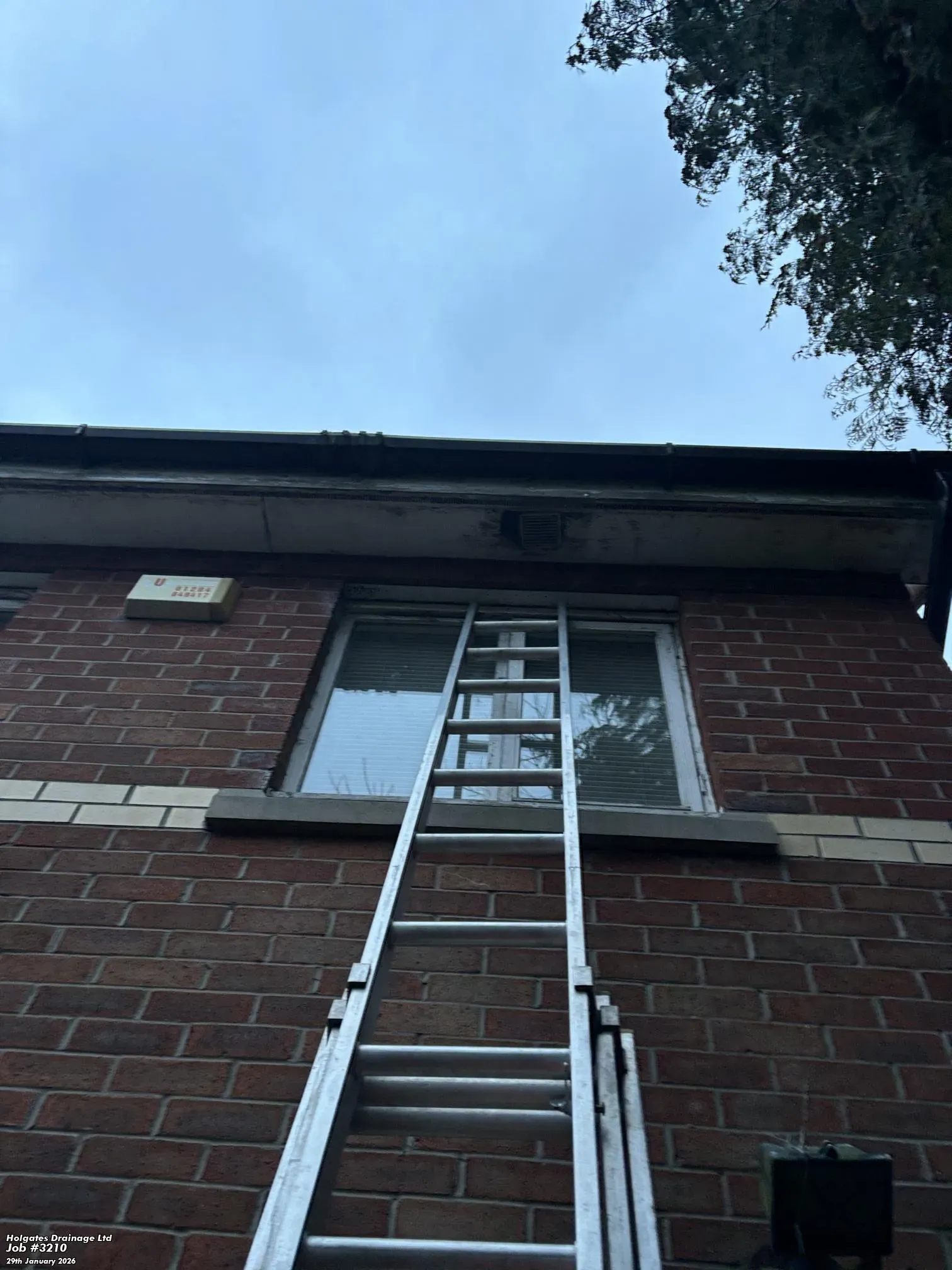
External Access
Using triple-extension ladders and telescopic lances allows us to treat high-level entry points at the roofline safely from outside.
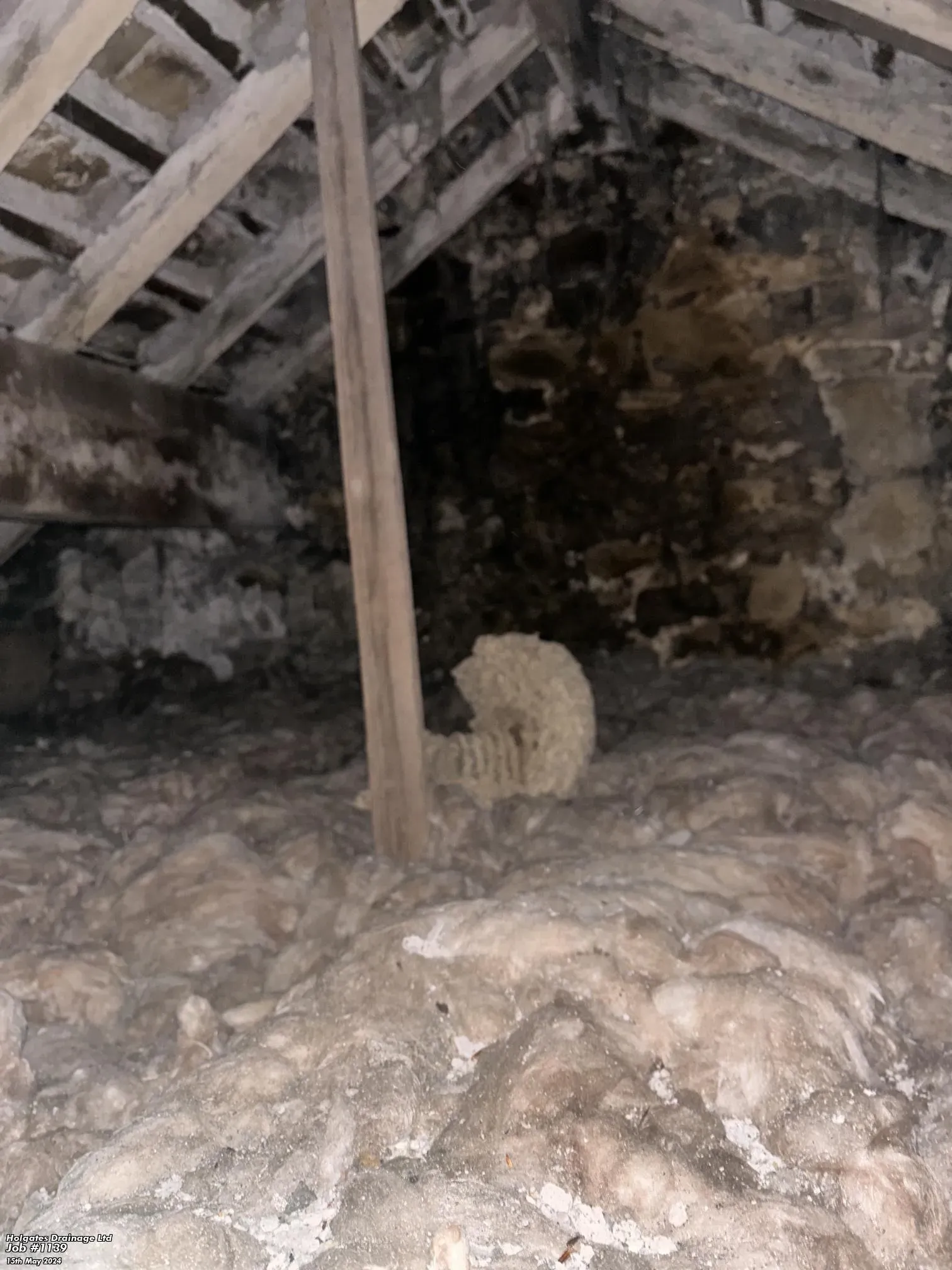
Hidden Nest Structure
What starts as a tiny mortar gap on the outside wall often leads to a football-sized nest sitting deep inside the roof space.
The Plasterboard Chewing Sign: Hearing Scratching in the Bedroom
We regularly get emergency call-outs to older stone properties around Darwen and modern timber-frame estates in Leyland where a homeowner has plugged a hole on Saturday afternoon, only to wake up on Sunday morning to a strange, rasping, ticking noise coming from the bedroom ceiling or stud wall.
That crisp, papery scratching sound is dozens of worker wasps taking turns chewing away at the back of your plasterboard. You might notice a damp-looking patch appearing on the paintwork or tiny flecks of white gypsum dust dropping onto the carpet. Once they break through the skim coat, a small pinhole opens up and wasps begin pouring into the room, drawn immediately toward the bedroom window glass or ceiling light.
If you have already blocked a hole and can now hear chewing inside the wall, do not try to dig the foam back out from a ladder—the wasps queued behind that plug will burst out at face height. Instead, tape a heavy-duty clear plastic bag or a sturdy plastic tub temporarily over the internal weak spot if the plaster is perforating, close the room door, stuff a towel along the bottom gap, and call us out.
Why You Actually Need That Entrance Hole Open
To eradicate a hidden cavity wasp nest without cutting holes in your ceilings, a pest technician relies entirely on that open entrance hole and the natural behaviour of the wasps.
Shop-bought aerosol cans are designed to knock down individual wasps in mid-air. If you spray liquid foam into a brick weep vent or airbrick, it barely reaches a few centimetres inside. Since the nest itself is often half a metre further up the cavity or tucked over the wall plate, the queen and the brood remain completely untouched.
When our technicians turn up, we leave the entrance unobstructed and inject a measured dose of professional-grade insecticidal dust deep into the void using a high-pressure telescopic lance. Because the hole is still open, the hundreds of foraging wasps returning from the garden land right in the dust at the entrance. They walk straight through it, coating their legs and bodies, and march it directly into the heart of the nest structure for us. Within a few hours, the dust transfers throughout the entire chamber, killing the queen and stopping all chewing and foraging within 24 hours.
What about Blocking Airbricks?
We often see clay or plastic airbricks taped over with gaffer tape or stuffed with wire wool to stop wasps. Beyond the wasp problem, airbricks are essential for ventilating the sub-floor void underneath your floorboards or airing out cavity walls. Blocking them permanently traps moisture and leads to timber rot.
Once we have eradicated the wasp nest and left it for a couple of days to ensure every last forager is dead, we can fit a proper, breathable stainless steel fine-mesh airbrick cover. That lets the airflow do its job while keeping queens and rodents out in future springs.
When Is It Safe to Seal Up a Mortar Gap?
Wait until the treatment has completely finished its work. After we dust an entrance, you will still see wasps flying back to the hole for the rest of the afternoon. That is normal—we want them to enter the hole and pick up the treatment.
By the next day, activity should have dropped to zero. Stand outside on a warm, dry afternoon for ten minutes and watch the hole. When you see zero wasps entering or leaving for 48 hours straight, the nest is dead. Wasps never reuse an old nest the following year, so the papery structure left inside the wall will simply dry out and crumble harmlessly. At that point, you can safely repoint the missing mortar or seal the gap around your pipework so new queens cannot use the same sheltered spot next spring.
Related Services & Guides
Practical pest advice and professional eradication services across Blackburn and Lancashire.
Wasp Nest Removal in Blackburn
Professional wasp nest removal in Blackburn. Same-day treatments for homes and businesses. Safe, effective eradication by CPCA accredited technicians.
How Much Does Pest Control Cost in the UK?
Find out what affects UK pest control prices, from council call-outs to private treatments, follow-up visits, and permanent entry-point proofing.
Are Pest Control Treatments Safe for Pets?
Find out how professional pest technicians protect dogs, cats, and children using lockable bait boxes, HSE-approved sprays, and safe drying times.
How Do Rats Get Into Houses Through Drains?
Find out how brown rats use broken clay pipes and missing drain bungs to enter cavity walls, and when a CCTV survey and rat blocker will stop them.
How to Tell if You Have Rats or Mice Under Floorboards
Hearing noises beneath the floor? Learn how to tell rats and mice apart using practical signs like dropping size, scratching sounds, and greasy rub marks.
Why Do Shop-Bought Mouse Traps and Poisons Fail?
Find out why DIY mouse traps and hardware-store poisons rarely clear a terrace house infestation, and why sealing 5mm entry gaps is the real fix.
What Are the UK Laws on Trapping Grey Squirrels?
Learn the UK legal rules on trapping invasive grey squirrels, why live release is illegal, and how to check for protected bats before starting loft work.
How Much Damage Can Squirrels Do in a Loft?
Learn what damage grey squirrels cause inside roof spaces, from chewed electrical wiring and torn loft insulation to gnawed roof timbers and soffits.
How Do You Prepare a Room for Bed Bug Treatment?
Learn how to prepare your rooms before a professional bed bug visit, including how to bag laundry safely and clear furniture without spreading eggs.
How to Spot Cockroaches Behind Kitchen Appliances
Learn how to check behind fridges, dishwashers, and kickboards for cockroach droppings, egg cases, and musty smells in your home or commercial kitchen.
Why Am I Still Seeing Fleas After a Room Spray?
Learn why dormant flea cocoons hatch days after a professional spray, how long full eradication takes, and why you must wait to vacuum.
Bird Spikes vs Tensioned Wire: Which Works Best?
Compare stainless steel bird spikes and tensioned wire systems. Learn how bird species, roosting pressure, and ledge styles determine the right deterrent.
Does Bird Proofing Void Your Solar Panel Warranty?
Find out how professional non-penetrating solar clips secure bird mesh without drilling into your panels, keeping your manufacturer warranty fully valid.
Can Pigeons Under Solar Panels Cause Bird Mites Inside?
Learn how pigeons nesting under solar panels bring biting bird mites into upstairs bedrooms, and why nest removal and sanitisation must happen with meshing.
Why Is Cleaning Dried Pigeon Droppings Yourself Risky?
Learn why sweeping dry pigeon guano in lofts or on balconies releases harmful airborne spores, and how biocide damping down keeps your home safe.
Do Small Businesses Need a Pest Control Contract?
Weigh up one-off emergency call-outs against routine pest control contracts. Learn how regular checks catch drain defects and insects before stock is ruined.
How Many Visits Does Mouse Control Take?
Find out why clearing a mouse infestation usually takes 2 to 3 visits, from checking tamper-resistant bait boxes to sealing 5mm entry gaps with copper mesh.
When Does Wasp Season Start and End in the UK?
Find out when UK wasp season starts and finishes, why late-summer wasps turn aggressive, and why old paper nests are never reused.
Do Bed Bugs Mean Throwing Your Mattress Away?
Learn why dumping a mattress with bed bugs often spreads eggs through your home, and how professional heat and seam treatments save your furniture.
German vs Oriental Cockroaches: What Is the Difference?
Learn how to tell German and Oriental cockroaches apart, from warm appliance motors to damp cellar drains, and why species matters for eradication.
How Do Pest Technicians Work Discreetly in Shops?
See how commercial pest technicians manage inspections, hidden bait stations, and out-of-hours treatments in shops and restaurants without alarming customers.
What Happens if a House Survey Finds Woodworm?
Found woodworm on a house survey? Learn how we check for active beetles, test timber moisture, and treat loft rafters or joists to satisfy lenders.
Why Do Silverfish Gather in Bathrooms and Kitchens?
Find out why damp plaster, leaky pipes, and high humidity attract silverfish and beetles, plus practical steps to seal gaps and clear infestations.
Got Wasps Entering Your Brickwork or Roofline?
Put the silicone gun down and give our local technicians a ring. We provide free, upfront quotes and fast same-day wasp treatments across a 20-mile radius of Blackburn.