What Happens if a House Survey Finds Woodworm?
Seeing "evidence of wood-boring insect activity" flagged in red on a pre-purchase RICS HomeBuyer Report can easily stall a house sale. In reality, most flight holes in older roof timbers are decades old and completely inactive—and even live infestations can usually be treated and certificated within a single day.
The Quick Answer for Buyers and Sellers
Why RICS Surveyors Flag Woodworm So Often
When a RICS surveyor carries out a Level 2 HomeBuyer Report or a Level 3 Building Survey, they shine a torch into the loft space and check any exposed timber under the stairs or in the cellar. The moment they spot small 1.5mm to 2mm round holes in the rafters, purlins, or floorboards, they are obliged to record it.
Because a general building surveyor is only conducting a visual, non-invasive check, they rarely crawl into the eaves or scrape back insulation to check for fresh beetle activity. Instead, they mark the section as requiring further investigation before exchange of contracts.
This triggers a query from the buyer's conveyancing solicitor and sometimes a mortgage retention from the bank. Neither the buyer nor the seller needs to panic—it simply means you need a practical, hands-on inspection from an accredited pest technician who knows how to tell a live beetle infestation from harmless historic scarring.
How We Tell Active Infestations from Old Holes
What people call "woodworm" is the larva of wood-boring beetles—most commonly the Common Furniture Beetle (Anobium punctatum). The female lays eggs in tiny cracks in untreated softwood. The grubs tunnel inside the timber for three to five years before chewing their way out as adult beetles between May and September, leaving the tell-tale flight hole behind.
That means the hole itself is actually the exit door. To find out if there are still live generations chewing away inside the wood, we climb into the loft or lift floorboards with inspection torches, probing tools, and timber moisture meters:
- Checking for fresh frass (bore dust): Active beetles push out fine, gritty, cream-coloured powder that piles up neatly beneath the timber or spills out of the holes when tapped. Under a magnifying glass, Common Furniture Beetle frass looks like tiny lemon-shaped pellets.
- Inspecting the internal edges of flight holes: A fresh exit hole made this summer has crisp, clean, pale wood inside the rim. An old hole from thirty years ago will be darkened by dust, oxidised to the same colour as the outside of the beam, and often filled with soot or spider webs.
- Testing timber moisture content: Woodworm larvae struggle to survive in bone-dry wood. They thrive when timber moisture sits between 14% and 28%. We press a calibrated pin moisture meter into joists and wall plates, especially in unventilated sub-floor voids or damp stone cottages around Clitheroe and the Ribble Valley.
- Checking for dead adult beetles: During the summer flight season, we check loft water tanks, skylights, and upstairs windowsills for dead 3mm brown beetles that emerged and headed toward the light.
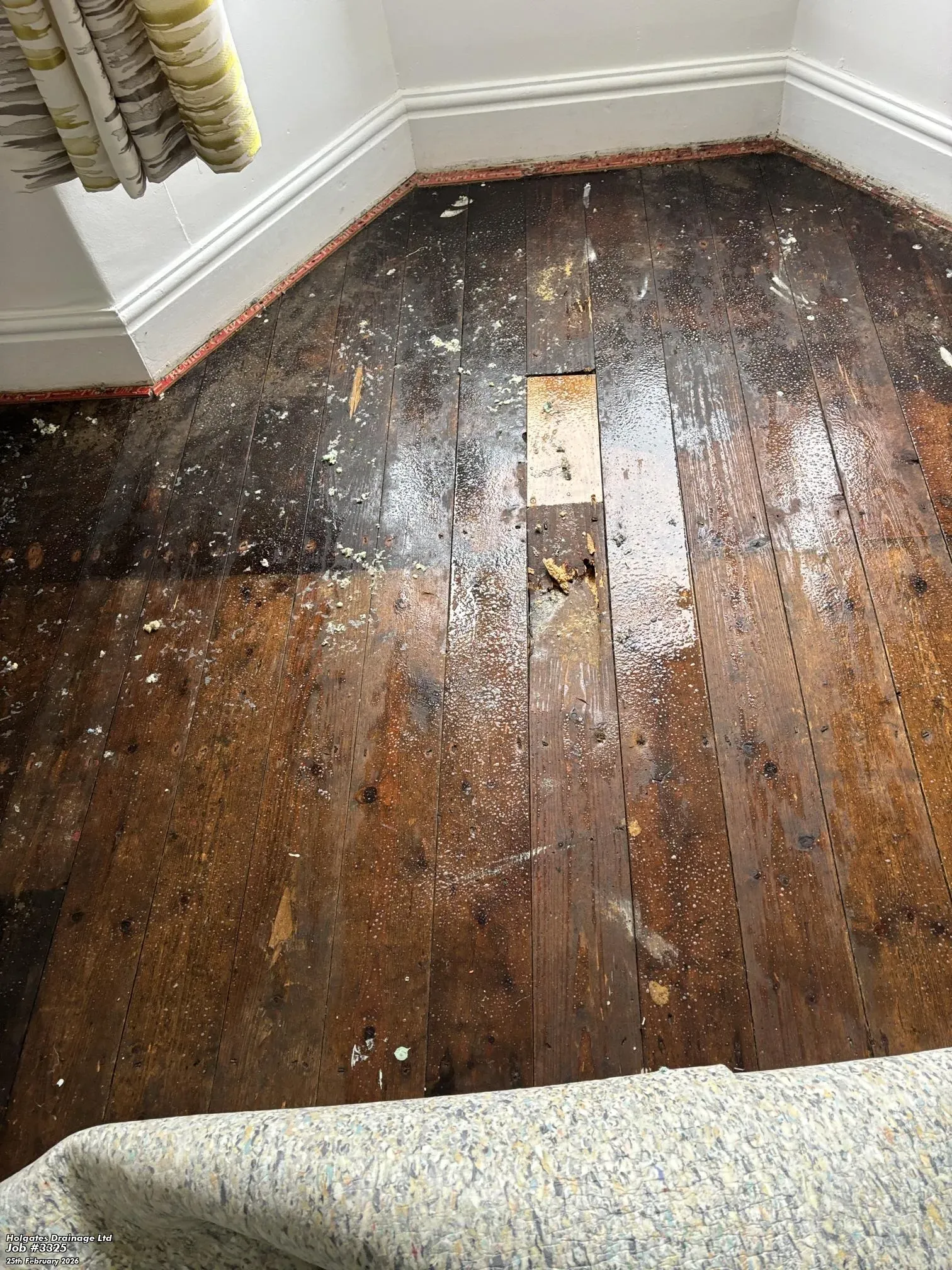
Sub-Floor Joists & Damp Timbers
Ground-floor floorboards and cellar joists over damp sub-floor voids hold higher moisture levels than heated rooms, making them a prime target for wood-boring larvae if airbricks become blocked.
Important Rule: Bats in Lofts
Before we spray any roof space, we always check the ridge beam and rafters for bat droppings or roosting bats. All UK bat species and their roosts are legally protected under the Wildlife and Countryside Act.
Mouse droppings are hard and solid, whereas bat droppings crumble easily into shiny insect wing fragments when rubbed between gloved fingers. If bats are present, standard solvent or permethrin sprays cannot be used without Natural England guidance, and bat-safe boron formulations or seasonal timing must be followed.
What Happens During a Professional Woodworm Treatment?
If our inspection confirms live beetle activity, we provide an upfront, fixed-price quote to eradicate the infestation. You do not need to move out of the property for days on end—modern professional water-based micro-emulsions and boron gels are low-odour and solvent-free.
Loft & Floor Prep
We wear protective overshoes inside your home, lay down dust sheets, and carefully rake back fibreglass loft insulation or lift every third or fourth tongue-and-groove floorboard so the bare timber surfaces are fully exposed.
HEPA Dust Extraction
Thick layers of century-old soot, cobwebs, and loose frass stop liquid treatments from soaking into the wood grain. We brush down or vacuum affected beams using HEPA-filtered extraction vacuums before applying any product.
Targeted Application
Using low-pressure lance sprayers, we apply an HSE-approved permethrin or boron-based timber fluid evenly across rafters, purlins, and joists. For thick structural oak beams or Deathwatch Beetle spots, we apply deep-penetrating insecticidal paste.
Drying & Paperwork
We relay the loft insulation once the timber surface is touch-dry, secure any lifted floorboards neatly back down, and issue our written treatment report so you can forward it straight to your mortgage broker or estate agent.
Does Woodworm Mean the Roof or Floor Needs Replacing?
Buyers often worry that woodworm means the roof is about to collapse. In practice, Common Furniture Beetle prefers the outer sapwood of softwood rafters rather than the dense inner heartwood. It takes many years of unchecked, heavy infestation in damp conditions to weaken a structural joist to the point where it fails.
When we inspect the timbers, we test suspect areas with a screwdriver or bradawl to check the structural core of the wood. If a timber has only surface flight holes and remains solid underneath, chemical treatment is all that is required.
Occasionally, we find that a leaking valley gutter or a blocked sub-floor airbrick in an older stone terrace has caused wet rot alongside beetle damage, leaving the end of a floor joist spongy and crumbly. As dedicated pest control technicians, we don't carry out general joinery or reroofing—which actually works in your favour during a house purchase, because you know we aren't trying to upsell unnecessary building work. If a joist end genuinely needs sistering or replacing by a joiner, we will show you photos of the exact spot and give you an honest assessment.
Who Pays for Woodworm Treatment in a House Sale?
Related Services & Guides
Further advice on household pests, property inspections, and specialist treatments across Lancashire.
Specialist Insect & Woodworm Treatments in Blackburn
Specialist woodworm and wood-boring insect treatments in Blackburn. Expert timber inspections, residual sprays, and structural assessments by Pest Medic.
How Much Does Pest Control Cost in the UK?
Find out what affects UK pest control prices, from council call-outs to private treatments, follow-up visits, and permanent entry-point proofing.
Are Pest Control Treatments Safe for Pets?
Find out how professional pest technicians protect dogs, cats, and children using lockable bait boxes, HSE-approved sprays, and safe drying times.
How Do Rats Get Into Houses Through Drains?
Find out how brown rats use broken clay pipes and missing drain bungs to enter cavity walls, and when a CCTV survey and rat blocker will stop them.
How to Tell if You Have Rats or Mice Under Floorboards
Hearing noises beneath the floor? Learn how to tell rats and mice apart using practical signs like dropping size, scratching sounds, and greasy rub marks.
Why Do Shop-Bought Mouse Traps and Poisons Fail?
Find out why DIY mouse traps and hardware-store poisons rarely clear a terrace house infestation, and why sealing 5mm entry gaps is the real fix.
What Are the UK Laws on Trapping Grey Squirrels?
Learn the UK legal rules on trapping invasive grey squirrels, why live release is illegal, and how to check for protected bats before starting loft work.
How Much Damage Can Squirrels Do in a Loft?
Learn what damage grey squirrels cause inside roof spaces, from chewed electrical wiring and torn loft insulation to gnawed roof timbers and soffits.
Why Should You Never Block Up a Wasp Nest Hole?
Blocking an active wasp hole with silicone or foam forces angry wasps to chew through internal plasterboard. Learn how professional lance treatments work.
How Do You Prepare a Room for Bed Bug Treatment?
Learn how to prepare your rooms before a professional bed bug visit, including how to bag laundry safely and clear furniture without spreading eggs.
How to Spot Cockroaches Behind Kitchen Appliances
Learn how to check behind fridges, dishwashers, and kickboards for cockroach droppings, egg cases, and musty smells in your home or commercial kitchen.
Why Am I Still Seeing Fleas After a Room Spray?
Learn why dormant flea cocoons hatch days after a professional spray, how long full eradication takes, and why you must wait to vacuum.
Bird Spikes vs Tensioned Wire: Which Works Best?
Compare stainless steel bird spikes and tensioned wire systems. Learn how bird species, roosting pressure, and ledge styles determine the right deterrent.
Does Bird Proofing Void Your Solar Panel Warranty?
Find out how professional non-penetrating solar clips secure bird mesh without drilling into your panels, keeping your manufacturer warranty fully valid.
Can Pigeons Under Solar Panels Cause Bird Mites Inside?
Learn how pigeons nesting under solar panels bring biting bird mites into upstairs bedrooms, and why nest removal and sanitisation must happen with meshing.
Why Is Cleaning Dried Pigeon Droppings Yourself Risky?
Learn why sweeping dry pigeon guano in lofts or on balconies releases harmful airborne spores, and how biocide damping down keeps your home safe.
Do Small Businesses Need a Pest Control Contract?
Weigh up one-off emergency call-outs against routine pest control contracts. Learn how regular checks catch drain defects and insects before stock is ruined.
How Many Visits Does Mouse Control Take?
Find out why clearing a mouse infestation usually takes 2 to 3 visits, from checking tamper-resistant bait boxes to sealing 5mm entry gaps with copper mesh.
When Does Wasp Season Start and End in the UK?
Find out when UK wasp season starts and finishes, why late-summer wasps turn aggressive, and why old paper nests are never reused.
Do Bed Bugs Mean Throwing Your Mattress Away?
Learn why dumping a mattress with bed bugs often spreads eggs through your home, and how professional heat and seam treatments save your furniture.
German vs Oriental Cockroaches: What Is the Difference?
Learn how to tell German and Oriental cockroaches apart, from warm appliance motors to damp cellar drains, and why species matters for eradication.
How Do Pest Technicians Work Discreetly in Shops?
See how commercial pest technicians manage inspections, hidden bait stations, and out-of-hours treatments in shops and restaurants without alarming customers.
Why Do Silverfish Gather in Bathrooms and Kitchens?
Find out why damp plaster, leaky pipes, and high humidity attract silverfish and beetles, plus practical steps to seal gaps and clear infestations.
Need a Woodworm Inspection for a House Purchase?
Speak directly to an experienced technician at Pest Medic. We inspect roof spaces and floor timbers across Blackburn & Lancashire and a 20-mile radius, giving you a clear answer and a free, no-obligation quote.